
For decades, real estate projects have been communicated through drawings, scale models, and brochures. These tools have helped explain the structure and design of developments, but they often leave buyers and investors trying to imagine the final experience. Understanding how a building will feel once completed has always required a certain level of interpretation.
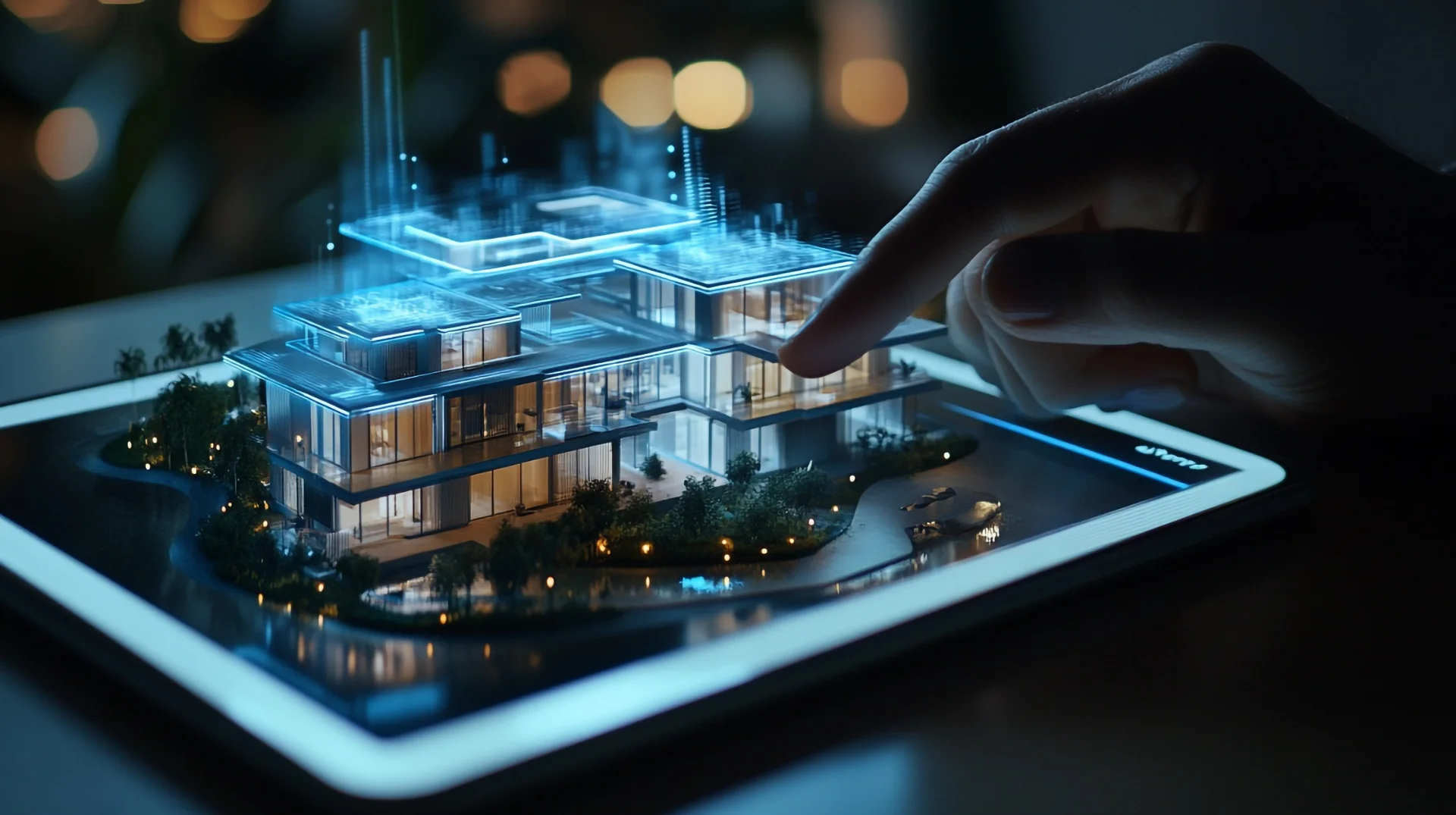
This is where digital twin technology for real estate is beginning to reshape the way projects are presented and understood. By creating a virtual replica of a building or development, it allows stakeholders to explore the space long before construction is finished. Instead of relying only on blueprints or renders, people can interact with a project in a way that feels far more real.
From Static Plans to Real Experiences
Blueprints remain the starting point for every real estate project. They guide architects, engineers, and construction teams throughout the development process. However, when these technical drawings are shared with buyers, investors, or marketing teams, they often fail to convey the full experience of the space.
A floor plan may clearly show room layouts and measurements, but it does not communicate how someone will move through the space, how rooms connect, or how the environment feels.
This is where 3D solutions for real estate experience are gradually transforming project presentation. Instead of looking at a fixed image or render, stakeholders can explore a digital environment that reflects the structure and scale of the actual design.
The Technology Behind the Transformation
The rise of digital twins in real estate has been made possible through advancements in mapping and visualization tools. Much of this progress comes from AI empowered mapping technology, which allows physical spaces or planned developments to be recreated with remarkable accuracy in the digital world.
Using intelligent spatial mapping, buildings can be captured and reconstructed as interactive environments. This means that everything from corridors and rooms to common areas and surrounding infrastructure can be represented digitally.
According to McKinsey Global Institute, digital twin technology is becoming an increasingly important tool in construction and infrastructure because it allows teams to simulate projects and evaluate designs before they are physically built.
For the real estate industry, this capability provides a clearer and more engaging way to present projects to both internal teams and potential buyers.
A Simpler Way to Explore Projects
As digital twin technology evolves, the focus is also shifting toward making these experiences easier for people to access. Instead of complex presentations, many developers are now looking for faster and more intuitive ways to showcase their projects.
This is where tools such as Propickle QT (Quick Tour) are gaining attention. Rather than requiring viewers to go through long walkthrough videos or multiple static images, a Quick Tour allows them to move through a property quickly and naturally.
Within a few moments, users can understand how the layout flows, how different spaces connect, and what the overall development looks like. This kind of experience makes project presentations more engaging and far easier to understand.
Research from Deloitte Insights also points out that immersive visualization technologies are helping developers communicate property value more effectively by allowing buyers to interact with projects even before construction is complete.
Improving Collaboration During the Design Stage
Digital twins are not only valuable for marketing and sales. They also support architects and planners during the design phase of a project.
When a development exists in a digital environment, teams can review layouts, study spatial relationships, and test design changes much more easily. Instead of interpreting drawings individually, stakeholders can explore the project together and evaluate decisions in real time.
The World Economic Forum has highlighted digital twin technology as a key innovation shaping the future of smart buildings and urban development. By using digital environments to simulate and analyze spaces, professionals can design more efficient and better functioning developments.
A New Standard for Real Estate Visualization
As technology continues to evolve, the way real estate is experienced is also changing. Developers, architects, and property marketers are gradually moving beyond static visuals toward more immersive ways of presenting their projects.
This is why 3D solutions for real estate experience are becoming an important part of modern real estate communication. With the support of AI empowered mapping technology and tools such as Propickle QT (Quick Tour), projects can now be explored in ways that were not possible just a few years ago.
Instead of asking people to imagine a future building, developers can now invite them to experience it digitally. In many ways, the journey of a building now begins long before construction starts, in a virtual environment where ideas come to life.