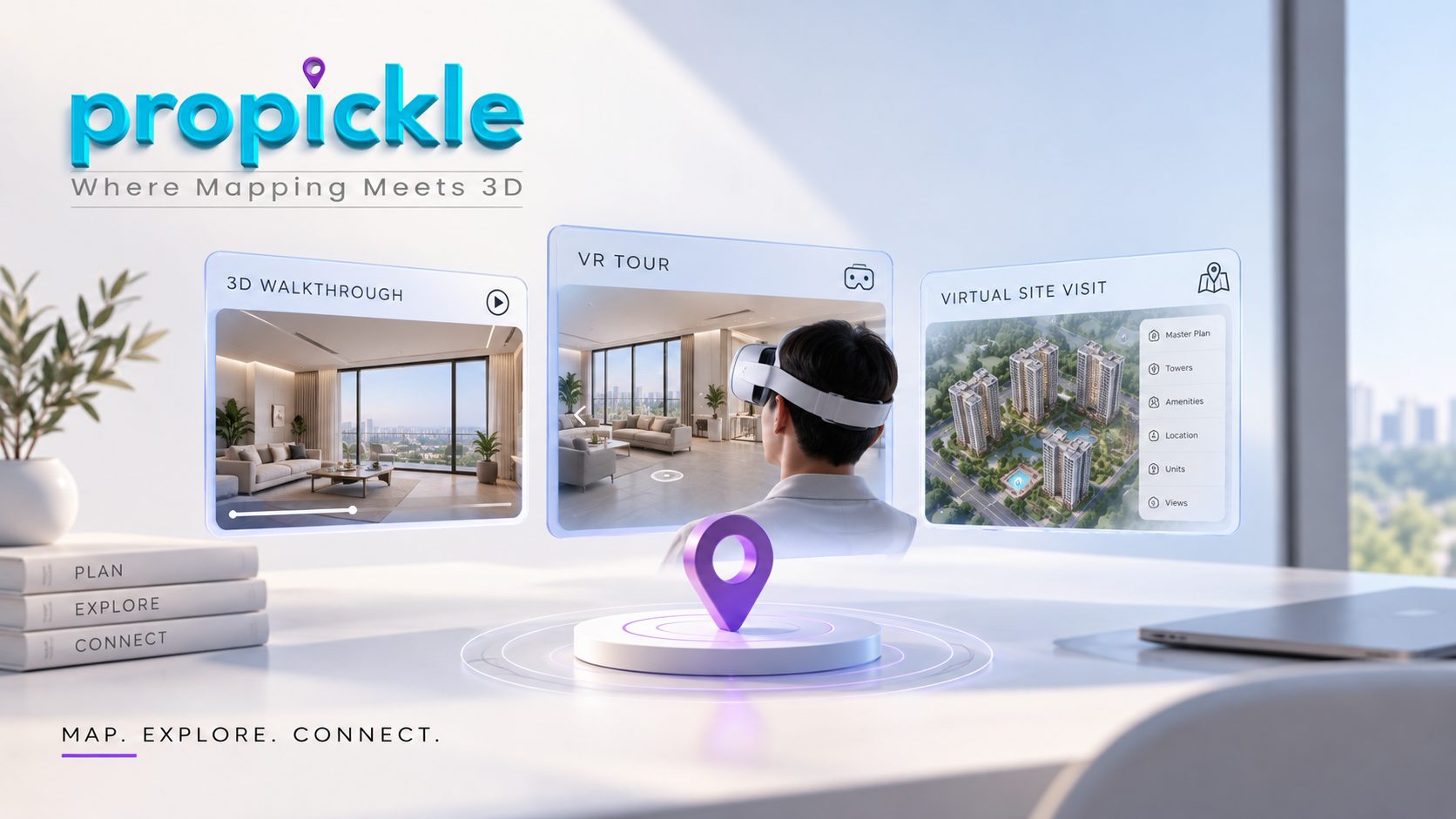
Real estate buyers no longer want to understand a project only through brochures, floor plans, or a few rendered images. They want to experience it before they visit it. This is why a virtual site visit for real estate projects has become increasingly valuable for developers looking to present properties more clearly and create stronger buyer interest.
However, terms like 3D walkthrough, VR tour, and virtual site visit are often used interchangeably. While all three help buyers explore a property digitally, they serve different purposes. Choosing the right format depends on how your project is being marketed, where your buyers are located, and what you want them to experience.
What Is a 3D Walkthrough?
A 3D walkthrough is a visually guided presentation of a property. It usually takes viewers through the entrance, living spaces, bedrooms, amenities, landscaping, and other important areas.
Think of it as a professionally directed tour where the project controls the story.
For upcoming developments, 3D walkthroughs are useful because they help potential buyers visualise spaces that may not physically exist yet. They can also be used across websites, presentations, launch events, digital campaigns, and sales galleries.
However, the viewer usually follows a predefined journey instead of exploring independently.
How Are VR Tours Different?
Virtual Reality takes immersion a step further. With a VR headset, buyers can feel as though they are standing inside the apartment, clubhouse, lobby, or landscaped area.
Instead of simply watching a property, they experience it.
VR can work especially well at experience centres, exhibitions, premium launches, and sales offices. It creates a strong first impression and can make a project presentation more memorable.
There is one limitation, though. Buyers usually need compatible hardware. That makes VR impressive for physical sales environments but less convenient when your audience is exploring the project from home.
Why Virtual Site Visits for Real Estate Projects Are Growing
A virtual site visit for real estate projects is built around accessibility. Buyers can explore a development digitally without travelling to the actual location.
This becomes particularly useful when prospects live in another city, are investing from overseas, or are still deciding whether a physical site visit is worth their time.
Well-designed virtual site tours for real estate projects can bring together location information, amenities, master plans, towers, units, views, and project features within one connected experience.
Instead of sending several PDFs, videos, maps, and images separately, teams can give prospects a clearer digital journey.
Where Web-Based 3D Experiences Fit
One of the most practical approaches is using web-based 3D walkthroughs for real estate.
Unlike headset-based VR, these experiences can run directly through a browser. Prospects can explore the project using a laptop, tablet, or smartphone without installing specialised software.
With web-based 3D walkthroughs for real estate, users can move between the master plan, towers, units, amenities, and surrounding location based on what interests them.
That flexibility makes them particularly useful for digital campaigns and remote sales conversations.
Which Experience Should Your Project Choose?
There is no single format that fits every project.
Choose a traditional 3D walkthrough when you need a polished visual story for advertisements, project launches, presentations, or social media.
VR works well when immersive experience is the priority and buyers are interacting with the project at a physical sales environment.
A virtual site visit for real estate projects, meanwhile, makes sense when accessibility and independent exploration matter. It allows prospects to understand the project from almost anywhere.
For many developers, combining these formats can be even more effective. A walkthrough can generate interest, while virtual site tours for real estate projects can help serious buyers explore details before booking an actual visit.
Turning Digital Exploration Into Better Sales Conversations
The real value of property technology is not simply making a project look impressive. It is helping buyers understand what they are considering.
Platforms such as Propickle Technologies can bring project information into interactive digital experiences, allowing sales teams to demonstrate locations, master plans, units, amenities, and views more clearly.
When web-based 3D walkthroughs for real estate are integrated into the sales journey, conversations can become more specific because prospects already have context before speaking with a representative.
Final Thoughts
The right format depends on the experience you want to create.
A 3D walkthrough tells the project’s story. VR places the buyer inside that story. A virtual site visit for real estate projects gives buyers the freedom to explore the story themselves.
For brands competing for attention in a crowded property market, that freedom can make digital project discovery more useful, engaging, and connected to the eventual site visit. Propickle Technologies helps developers create these interactive experiences so buyers can move from curiosity to informed exploration with greater ease.
Frequently Asked Questions
1. What is the difference between a 3D walkthrough and a virtual site visit?
A 3D walkthrough usually follows a predefined visual journey, while a virtual site visit allows buyers to explore different parts of a project more independently.
2. Do virtual site tours require a VR headset?
Not necessarily. Many virtual site tours for real estate projects can work directly on browsers, allowing buyers to explore using smartphones, tablets, or laptops.
3. Are web-based 3D experiences useful for real estate sales teams?
Yes. They can help sales teams explain project layouts, amenities, towers, units, and location advantages more clearly before or during a sales conversation.