For years, the real estate sales journey followed a familiar pattern. A buyer saw an advertisement, spoke to a sales team, booked a site visit, and explored the project in person. That journey is changing. Today, digital twin technology for real estate allows buyers to understand a project before they ever reach the site. Developers can now build interest by bringing the project directly to the buyer’s screen.
The First Real Estate Experience Is Now Digital
Most property searches begin online. Buyers compare locations, floor plans, amenities, views, and tower positions before making a serious enquiry.
Yet traditional digital assets have limits. A brochure may look impressive, but it cannot always explain how the full development comes together. Static renders show selected views, while videos usually follow a fixed path.
Digital twins change that experience because the buyer can explore instead of simply watch.
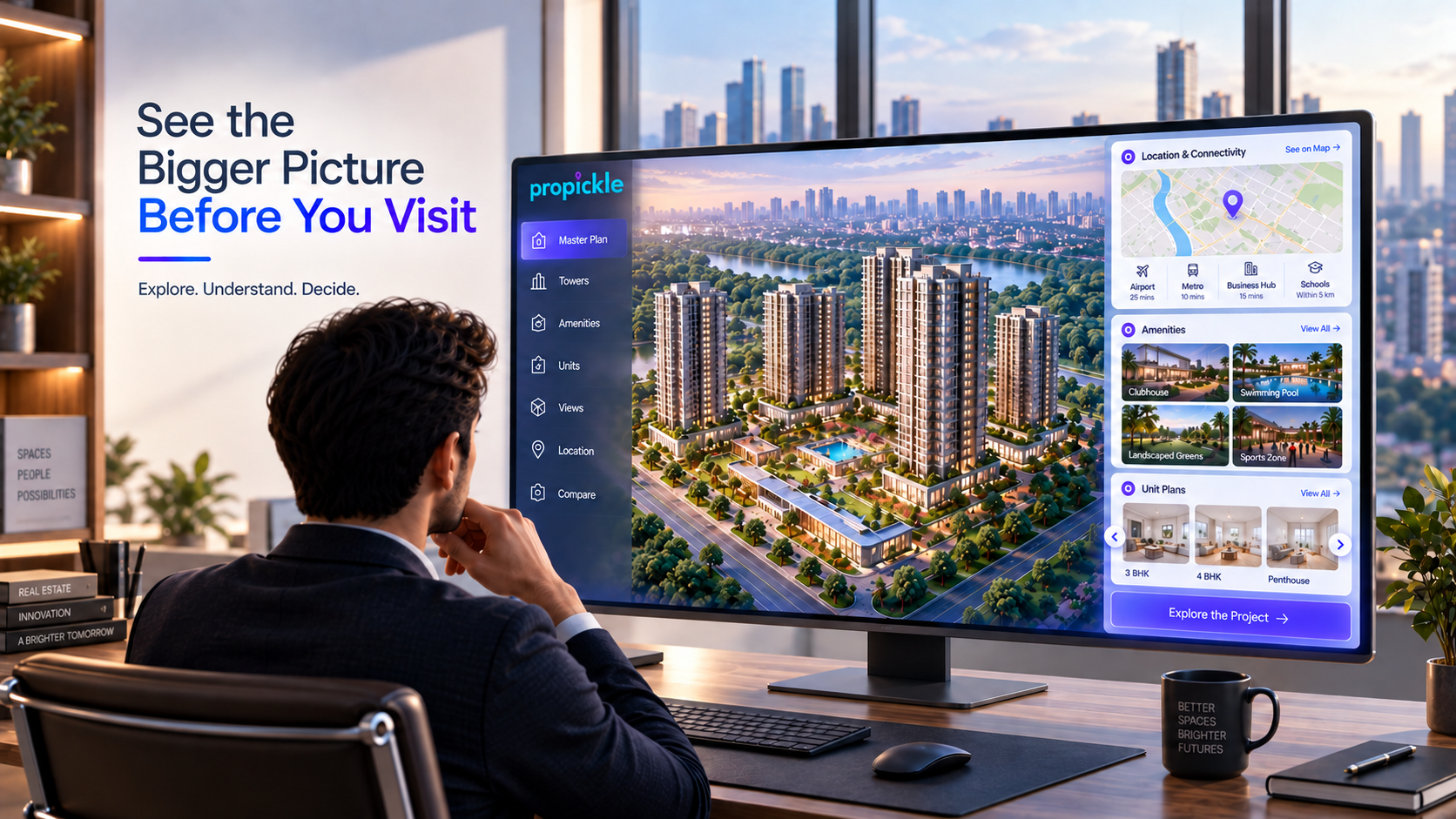
With digital twin technology for real estate, a project can become an interactive environment where buyers understand the master plan, move between towers, explore amenities, study unit positions, and see how different parts of the development connect.
Why Digital Twins Are Redefining Site Visits
A physical site visit still matters, especially when a buyer is close to making a decision. What is changing is the role it plays in the sales journey.
Earlier, the site visit was often the first moment when the project became clear. Now, buyers can arrive informed.
Buyers Can Explore Before They Travel
Consider a buyer living in another city or country. Travelling to a project just to understand its basic layout may not always be practical.
An interactive digital twin can help that buyer explore remotely before planning a visit. They can see where a preferred tower sits, how close it is to amenities, what surrounds the project, and which unit options may suit them.
As a result, the eventual site visit becomes more focused.
Sales Teams Can Explain Projects More Clearly
Real estate projects contain many layers of information. Master plans, tower locations, units, amenities, views, and nearby landmarks can be difficult to explain through separate materials.
This is where 3D solutions for real estate experience can simplify the conversation.
Instead of moving between multiple files, a sales team can guide the buyer through one connected visual experience. This makes discussions easier to follow and helps buyers ask more specific questions.
Digital Twin Technology for Real Estate Adds Context
A floor plan can show room dimensions. A render can show interiors. A map can show nearby landmarks. However, buyers also need to understand how these details relate to each other.
Digital twin technology for real estate can connect these layers within one experience. A buyer can move from the overall project to a tower, from the tower to a unit, and from the unit to its possible view or surroundings.
For developers, this creates a more complete way to present the project. For buyers, it reduces the effort required to imagine the finished development.
From Presentation to Exploration
The biggest shift is simple. Real estate marketing is moving from showing projects to letting buyers explore them.
Modern 3D solutions for real estate experience are not designed to replace every brochure, salesperson, or site visit. Instead, they strengthen each touchpoint by giving buyers a clearer understanding earlier.
At Circuit Story, the opportunity is to create digital experiences that make complex real estate projects easier to explore and communicate. When technology supports a clear sales purpose, project information becomes more useful, visual, and easier for buyers to understand.
The Site Visit Is Becoming the Next Step, Not the First
The site visit is not disappearing. Its position in the buying journey is changing.
With digital twin technology for real estate, buyers can explore, compare, shortlist, and understand a project before arriving. By the time they visit, they are no longer starting from zero.
For developers and marketers, that can mean stronger interest, better-qualified conversations, and more meaningful interactions.
The future of real estate sales may still include the site visit. It just may not begin there.
Frequently Asked Questions
1. What is digital twin technology for real estate?
Digital twin technology for real estate creates an interactive digital version of a property or development. Buyers can explore the project, towers, amenities, units, surroundings, and other details through a visual interface.
2. Can digital twins replace physical site visits?
Not completely. Digital twins help buyers understand and shortlist a project before visiting it physically. This makes the eventual site visit more informed, focused, and meaningful.
3. How do 3D solutions help real estate sales teams?
3D solutions for real estate experience allow sales teams to present project information visually instead of relying only on brochures, floor plans, or verbal explanations. This can make complex project details easier for buyers to understand.
4. Why are digital twins becoming important in real estate marketing?
Buyers increasingly begin their property search online. Digital twins help developers create interactive project experiences that allow buyers to explore before they visit, making digital marketing more useful throughout the sales journey.