The real estate industry is evolving faster than ever, and buyers today expect more than brochures, floor plans, and static visuals. This shift is exactly why digital twin technology for real estate is becoming one of the most valuable tools in modern property marketing. From immersive walkthroughs to intelligent project mapping, developers are now using advanced visualization to create experiences that help buyers connect with projects before they are even completed.
As competition grows, simply showing a property is no longer enough. Buyers want to explore spaces, understand layouts, and visualize the lifestyle attached to a project. This is where digital twins are changing the game.
What Is Digital Twin Technology in Real Estate?
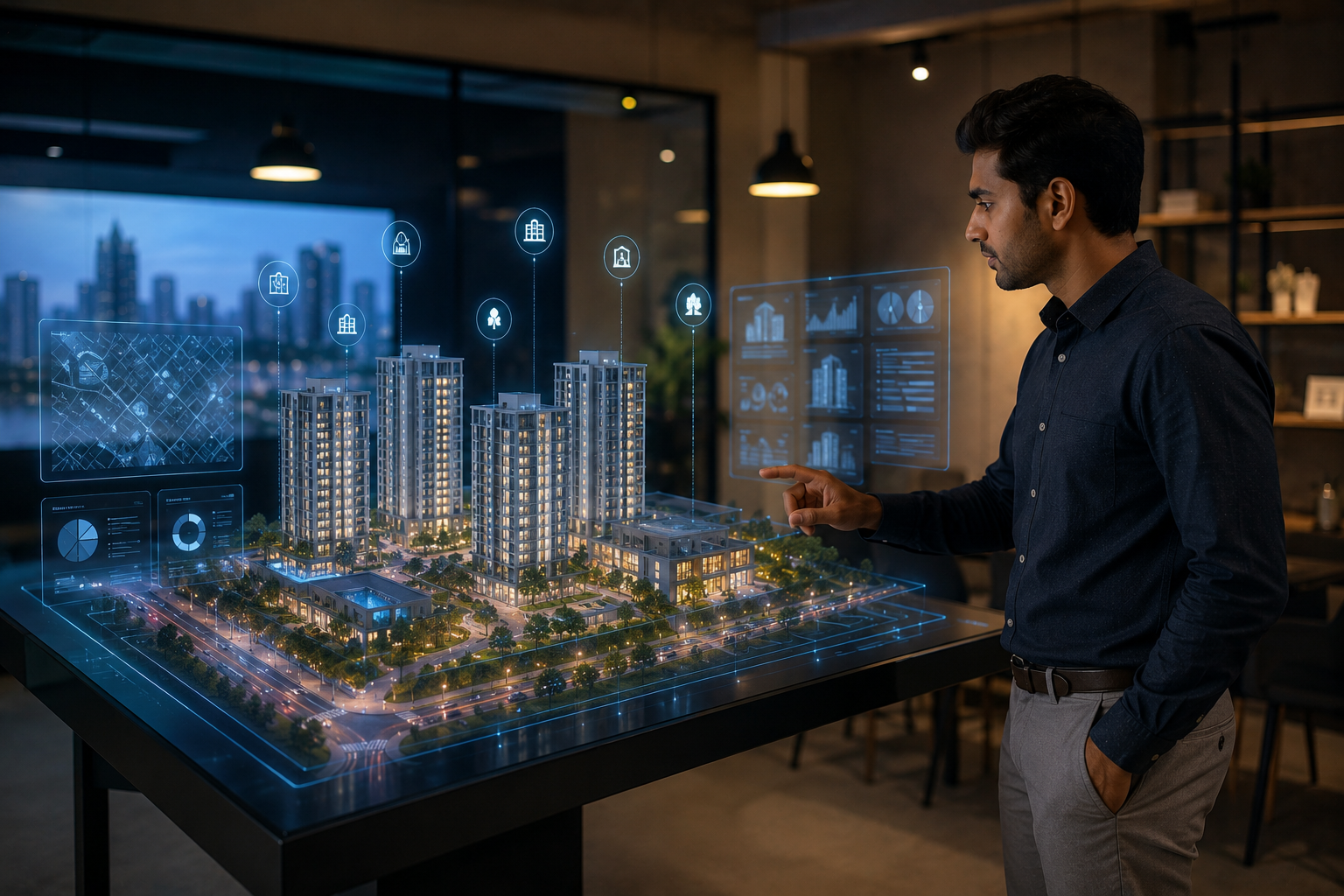
A digital twin is a virtual replica of a physical property or development. It combines real-world project data with interactive 3D environments to create a highly immersive experience. Unlike traditional renders, digital twins allow users to navigate spaces, interact with environments, and understand projects from multiple perspectives.
Today, many developers are using digital twin software to showcase residential communities, commercial spaces, townships, and mixed-use developments. Instead of relying only on images, they can now present an entire project digitally with far more detail and realism.
This approach improves communication between developers, architects, sales teams, and buyers while making presentations more engaging and easier to understand.
Why Digital Twin Technology for Real Estate Is Growing Rapidly
The demand for immersive experiences has increased significantly in recent years. Buyers often make decisions online before visiting a site physically. Because of this, visual presentation has become one of the biggest factors in real estate marketing.
Using digital twin technology for real estate, developers can create interactive property experiences that feel more real and informative. Buyers can explore amenities, understand master plans, view surroundings, and even experience lighting or spatial flow before construction is complete.
This becomes especially useful for large-scale projects where explaining the complete vision through static visuals can be difficult.
At the same time, digital experiences also help sales teams communicate more effectively. Instead of long explanations, a well-designed digital twin can instantly simplify complex project details.
How Real Estate Project Visualisation Is Becoming More Advanced
Modern buyers are highly visual. They want to experience a project emotionally, not just technically. This is why Real estate project visualisation has moved far beyond simple 3D renders.
Today’s visualisation tools include interactive walkthroughs, drone mapping, immersive storytelling, and live digital environments. These technologies help buyers understand not only the property itself but also the lifestyle around it.
For example, a buyer exploring a luxury township can digitally walk through landscaped gardens, clubhouse spaces, road networks, and surrounding infrastructure from their device. This creates a stronger emotional connection and increases buyer confidence.
Brands like Propickle 3D are contributing to this transformation by combining mapping technology with immersive visual experiences that make property discovery more engaging and informative.
Benefits of Digital Twin Software for Developers
Better Buyer Engagement
Interactive experiences naturally capture more attention than static brochures. Buyers spend more time exploring projects when they can interact with spaces digitally.
Faster Decision-Making
When buyers clearly understand layouts, amenities, and surroundings, they feel more confident making purchase decisions. This reduces confusion during the sales process.
Stronger Project Presentation
Using digital twin software, developers can present projects in a more premium and future-ready way. It helps projects stand out in a crowded market.
Improved Remote Selling
Digital twins make remote project presentations easier for NRI buyers and outstation investors. Buyers can explore properties from anywhere without depending entirely on physical site visits.
The Future of Digital Twin Technology for Real Estate
The future of real estate marketing is becoming increasingly immersive. As technology continues to evolve, digital twins are expected to become a standard part of project launches and sales strategies.
Developers are now looking beyond visuals and focusing on complete digital experiences. This includes smarter project mapping, interactive infrastructure views, and immersive storytelling that helps buyers feel connected to projects instantly.
With the rise of smart cities and large-scale developments, digital twin technology for real estate will continue to play a major role in helping brands communicate their vision more effectively.
Companies working in this space, including Propickle 3D, are helping reshape how projects are showcased by blending technology, mapping, and visualisation into one seamless experience.
Conclusion
Real estate marketing is no longer limited to brochures and static presentations. Buyers now expect clarity, interaction, and immersive experiences before making decisions. This shift has made Real estate project visualisation more important than ever.
By using advanced digital twin software, developers can create stronger presentations, improve buyer confidence, and simplify project communication. As the industry becomes more digitally driven, embracing digital twin technology for real estate is quickly turning from an innovation into a necessity.